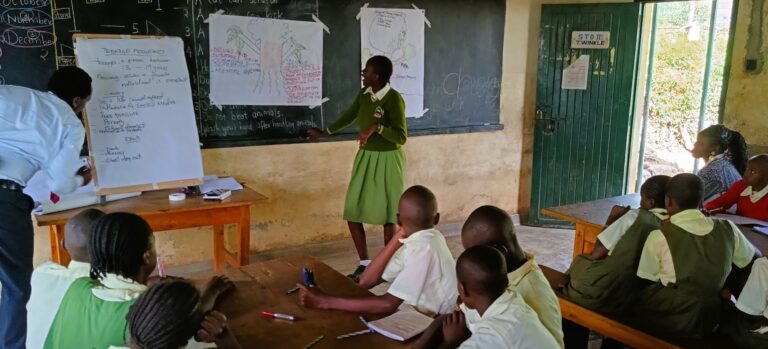
TETEA
Together Empowering society To Eliminate the Abuse of women and children in Kenya
Laura Carraro, Director of the Africa Geographic Area, is answering #5questions today as we continue our journey to get to know the individuals who shape CISP’s history every day.
Don’t forget to read our previous issues with Deborah Rezzoagli, Gianluca Falcitelli, Luigi Grando, and Giordana Francia. And keep following us for upcoming features!
I started working for CISP in Kenya in 2013 as a project manager for a child rights promotion initiative. Those were the early years of our collaboration with the Department of Children’s Services (DCS) and UNICEF, focusing on establishing Child Protection Centers. These hubs provided services for violence prevention, child rights promotion, and follow-up on abuse cases. Our partnership with the DCS continues to this day. A few years later, I began working at CISP’s headquarters, first as Africa Area Coordinator, and then, in 2020, as Director.
There are two experiences in particular that I believe shaped me significantly.
One is connected to my years of volunteering at a fair trade cooperative. This was in the early 2000s, during the Social Forum era, and that experience brought me much closer to issues of social and economic justice. It’s a path I kept following, leading me to visit a fair number of producers in various countries over the years. It has continued to enrich and teach me a great deal.
The second one is what I would call my first “field” experience. I spent several months in Pemba, northern Mozambique, at a family assistance center. Since then, I’ve felt a strong connection to the country. I’ve been fortunate enough to return multiple times, and for the past decade, with CISP, I’ve been involved in a program focusing on economic development, social cohesion, and gender empowerment.
The challenges are numerous, and the political, economic, and environmental balances that emerge are often extremely fragile. As a result, years of hard work and progress can crumble very quickly.
Take Sudan, for example. The war that erupted in April 2023 between the Sudanese Armed Forces and the Rapid Support Forces has caused one of the world’s worst humanitarian crises, largely unseen. It represents a dramatic regression from the revolution in 2019, which led to the deposition of Omar Al-Bashir through a widespread civil protest movement.
Today, the situation across the country remains highly unstable, with 13 million displaced people and 26 million experiencing acute food insecurity. Recent attacks on Port Sudan have further jeopardized the stability that we had tried to consolidate, which is essential for humanitarian intervention. CISP operates in Port Sudan and Gedaref states, working to improve the nutritional status and food security of families with severe malnutrition cases. We also support agricultural activities and income generation within the communities where we work. We achieve this thanks to the dedication of our staff, but also through partnerships with Sudanese organizations at the forefront of responding to the crisis.
People give me hope. I think of my colleagues who, with great tenacity and in increasingly complex contexts, tirelessly seek ways to make the world a more just place. I think of the thousands of people with whom and for whom we work—the small steps forward that seem minor but truly change someone’s life, and the resilience and perseverance of entire communities facing difficult daily realities. Beyond systems, theories, and procedures, this work is ultimately about people, and it relies on their determination.
There’s a group of rice seed producers in Nkothakota, Malawi, called Tipindule Seed Multipliers. I’ve had the chance to meet them several times over the years and, in a way, followed their evolution from an informal group of farmers to a very active and successful small cooperative selling certified seeds. On one of these occasions, we stayed together a bit longer, sitting in the shade of the trees near the rice fields. They told us about their goals, both as individuals and as a group: rebuilding their house roofs, saving enough to build a small rice storage unit, buying motorbikes to sell seeds all the way to Karonga. I often think of their optimism and determination. It gives me motivation and confidence that we can achieve our goals!


Together Empowering society To Eliminate the Abuse of women and children in Kenya
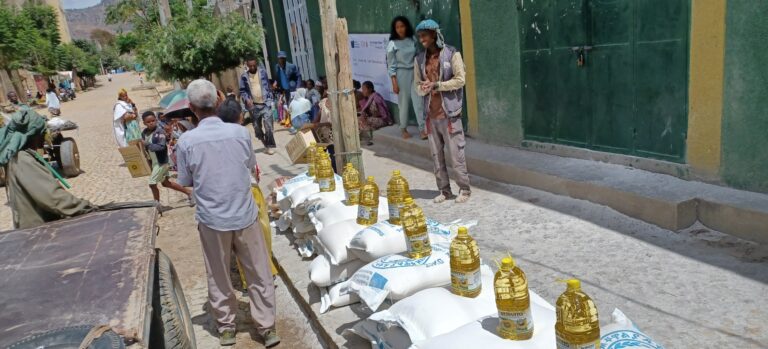
Reverse the Acute Humanitarian Crises in Tigray
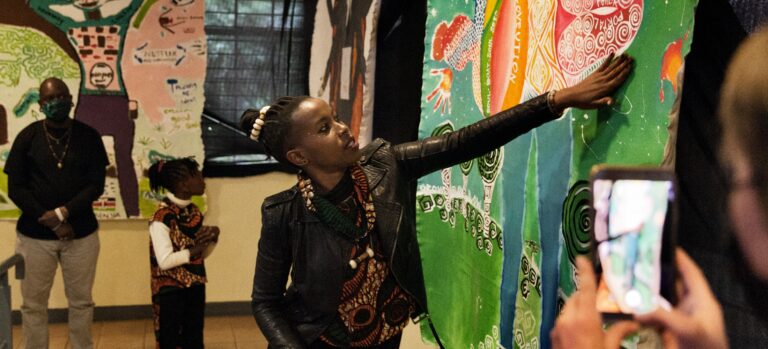
Culture for the promotion of Peace, Reconciliation and Social Cohesion
CISP - Sviluppo dei Popoli ETS
FONDAZIONE DI PARTECIPAZIONE
Via Germanico 198 00192 Rome Italy
Tel: +39 06 321 54 98
Fax: +39 06 321 61 63
Email: cisp@cisp-ngo.org
Iscrizione al RUNTS REP. N. 160551
C.F. 97050280581